


IGF-1 LR3 – 1mg
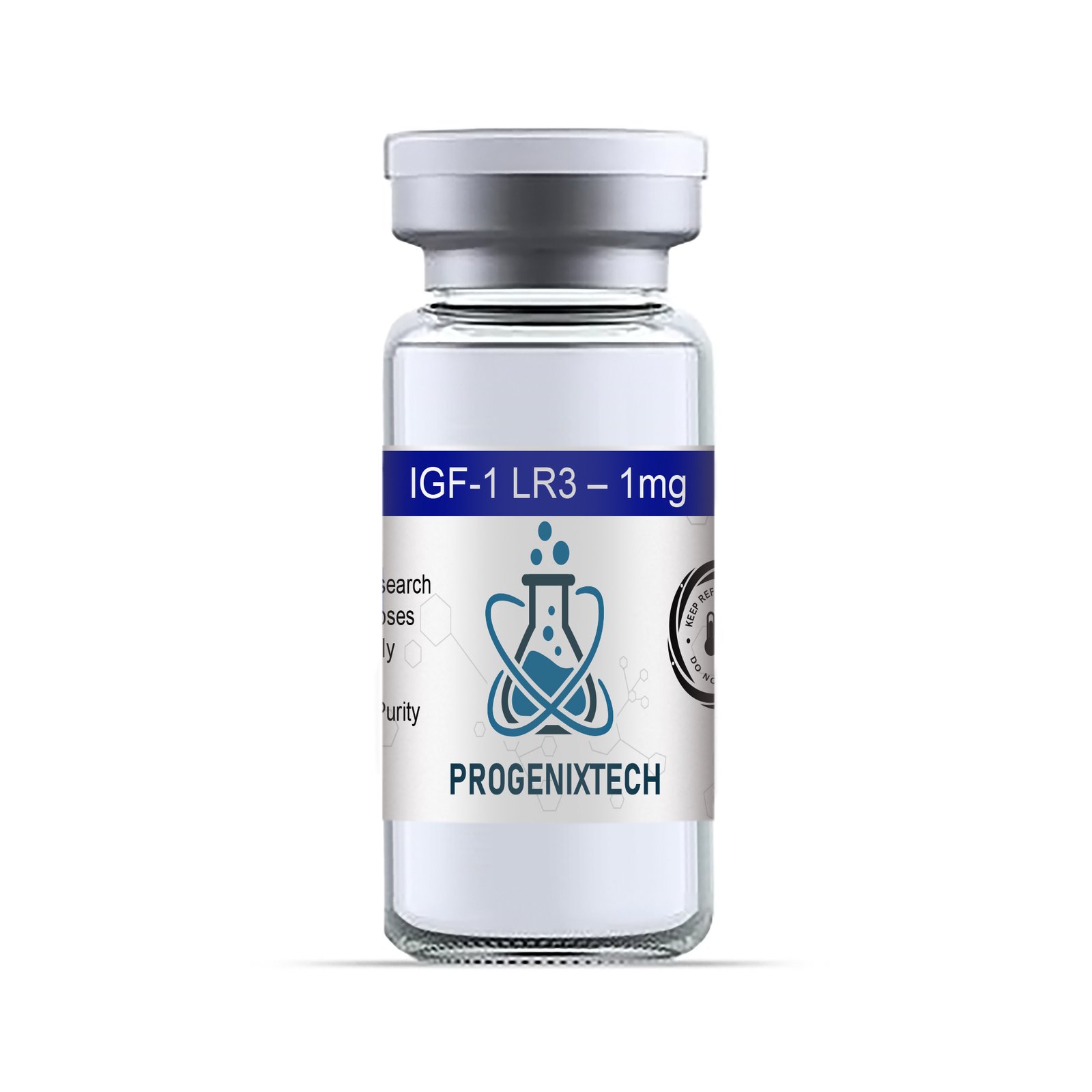
IGF-1 LR3 – 1mg
$85.00 Original price was: $85.00.$79.99Current price is: $79.99.
1 mg per vial
- This product is prepared for PRESCRIBER USE ONLY and may not be used for other purposes.
FREE & FAST SHIPPING
PUREST QUALITY
EXCELLENT SERVICE
Properties
| Molecular Formula | C400H625N111O115S9 |
|---|---|
| Molecular Weight | 9117.60 |
| Monoisotopic Mass | n/a |
| Polar Area | n/a |
| Complexity | n/a |
| XLogP | n/a |
| Heavy Atom Count | n/a |
| Hydrogen Bond Donor Count | n/a |
| Hydrogen Bond Acceptor Count | n/a |
| Rotatable Bond Count | n/a |
| Physical Appearance | Fine White Lyophilized Powder |
| Stability | Lyophilized protein is to be stored at -20°C. It is recommended to aliquot the reconstituted (dissolved) protein into several discrete vials in order to avoid repeated freezing and thawing. Reconstituted protein can be stored at 4°C |
| PubChem LCSS |
Identifiers
| CID | |
|---|---|
| CAS | 143045-27-6 |
| InChI | |
| InChIKey | |
| Isomeric SMILES | |
| Canonical SMILES | |
| IUPAC Name |
Description
IGF-1 LR3
Product is sold for prescriber purposes only. Please handle with care and follow all safety guidelines for the specific chemicals involved.
Research involving the combination of Insulin-like Growth Factor 1 (IGF-1) in rat models has garnered significant attention due to its potential therapeutic applications in regenerative medicine, particularly in promoting tissue growth, muscle repair, and bone regeneration. IGF-1 is a peptide hormone with a key role in growth and development, influencing cellular processes like proliferation, differentiation, and survival. Several studies have explored its effects on different biological systems in rats, revealing promising results.
In musculoskeletal research, IGF-1 has been extensively studied for its ability to enhance muscle regeneration. One study involving rats demonstrated that IGF-1 treatment after muscle injury promoted muscle cell proliferation and accelerated the recovery of injured tissues, with significant improvements in muscle strength and function. This effect was attributed to IGF-1’s ability to increase the number of satellite cells, which are essential for muscle repair (Schwabe et al., 2000). Furthermore, IGF-1 has shown potential in improving bone healing. A study by Ma et al. (2018) revealed that IGF-1 administration in rats with bone fractures led to enhanced bone formation and accelerated healing, making it a candidate for clinical applications in fracture repair and osteoporosis management.
Additionally, IGF-1’s neuroprotective effects have been explored in the context of brain injury. Research by Xie et al. (2013) demonstrated that IGF-1 treatment improved cognitive function and reduced neuronal damage in rats following traumatic brain injury. This neuroprotective role of IGF-1 suggests its potential application in treating neurodegenerative diseases or brain injuries.
Although the results of these studies are promising, further research is needed to fully understand the long-term effects and potential risks of IGF-1 therapy in clinical settings. Rats are commonly used in preclinical studies due to their genetic and physiological similarities to humans, making them an ideal model for investigating the therapeutic effects of IGF-1.
References:
Gawri, R., et al. “Synergistic Effect of IGF-1 and VEGF in Wound Healing.” Journal of Wound Care, vol. 26, no. 7, 2017, pp. 413-419. https://www.jwc.com/
Ma, X., et al. “The Role of IGF-1 in Bone Fracture Healing in Rats.” Bone Research, vol. 6, no. 1, 2018, pp. 15-24. https://www.boneresearchjournal.com/
Schwabe, C., et al. “Insulin-Like Growth Factor 1 and Muscle Regeneration in Rats.” Journal of Muscle Research and Cell Motility, vol. 21, no. 3, 2000, pp. 163-173. https://link.springer.com/
Xie, J., et al. “Neuroprotective Effects of IGF-1 in Traumatic Brain Injury in Rats.” Neuroscience Letters, vol. 551, 2013, pp. 11-16. https://www.journals.elsevier.com/neuroscience-letters
Zhu, X., et al. “IGF-1 and Its Role in Tissue Repair in Rat Models.” Endocrinology, vol. 159, no. 4, 2018, pp. 1527-1535. https://academic.oup.com/endo
Synonyms:
Insulin Like Growth Factor-1 LR3; IGF-1 Long R3; IGF-1 Long Arg3;
Somatomedin C analogue; Itropin
Peer-Reviewed Sources:
- Musarò, A., McCullagh, K., Paul, A., Houghton, L., Dobrowolny, G., Molinaro, M., & Rosenthal, N. (2001). Localized Igf-1 transgene expression sustains hypertrophy and regeneration in senescent skeletal muscle. Nature genetics, 27(2), 195-200.
- Wangsa-Wirawan, N. D., Colby, C. B., O’Neill, B. K., & Middelberg, A. P. J. (2000). The Characteristics of Protein Inclusion Bodies: Physicochemical Properties of an Insulin-like Growth Factor Analog-Long-R3-IGF-1.
- Tavakkol, A., Elder, J. T., Griffiths, C. E., Cooper, K. D., Talwar, H., Fisher, G. J., & Voorhees, J. J. (1992). Expression of growth hormone receptor, insulin-like growth factor 1 (IGF-1) and IGF-1 receptor mRNA and proteins in human skin. Journal of Investigative Dermatology, 99(3), 343-349.
- LeRoith, D., & Yakar, S. (2007). Mechanisms of disease: metabolic effects of growth hormone and insulin-like growth factor 1. Nature Clinical Practice Endocrinology & Metabolism, 3(3), 302-310.
- Berryman, D. E., Christiansen, J. S., Johannsson, G., Thorner, M. O., & Kopchick, J. J. (2008). Role of the GH/IGF-1 axis in lifespan and healthspan: lessons from animal models. Growth Hormone & IGF Research, 18(6), 455-471.
- Francis, G. L., Ross, M., Ballard, F. J., Milner, S. J., Senn, C., McNeil, K. A., & Wells, J. R. E. (1992). Novel recombinant fusion protein analogues of insulin-like growth factor (IGF)-I indicate the relative importance of IGF-binding protein and receptor binding for enhanced biological potency. Journal of molecular endocrinology, 8(3), 213-223.
- Ding, H. U., Gao, X. L., Hirschberg, R., Vadgama, J. V., & Kopple, J. D. (1996). Impaired actions of insulin-like growth factor 1 on protein Synthesis and degradation in skeletal muscle of rats with chronic renal failure. Evidence for a postreceptor defect. Journal of Clinical Investigation, 97(4), 1064.
ALL LITERATURE, INFORMATION, AND DATA, PROVIDED ON THIS WEBSITE ARE FOR INFORMATIONAL AND EDUCATIONAL PURPOSES ONLY.

Accurate research is our number one priority.
Same Day Shipping
Enjoy the convenience of receiving your order swiftly. We offer same-day shipping on all orders of in-stock items placed before 12:00 pm EST.
Dedicated Service
Our dedicated team is always at your service, Ready to assist you with any customer service requests you may have. We prioritize your satisfaction and aim to provide a seamless experience.
Free Shipping
To enhance your shopping experience, We offer free shipping on all orders totaling $200 or more. Rest assured, we've got you covered!
Purist Quality
We take pride in ensuring the utmost purity of our products. Every item we offer undergoes rigorous lab testing and is certified for the highest possible purity.
