


TB500 (Thymosin Beta-4) – 5mg | 10mg
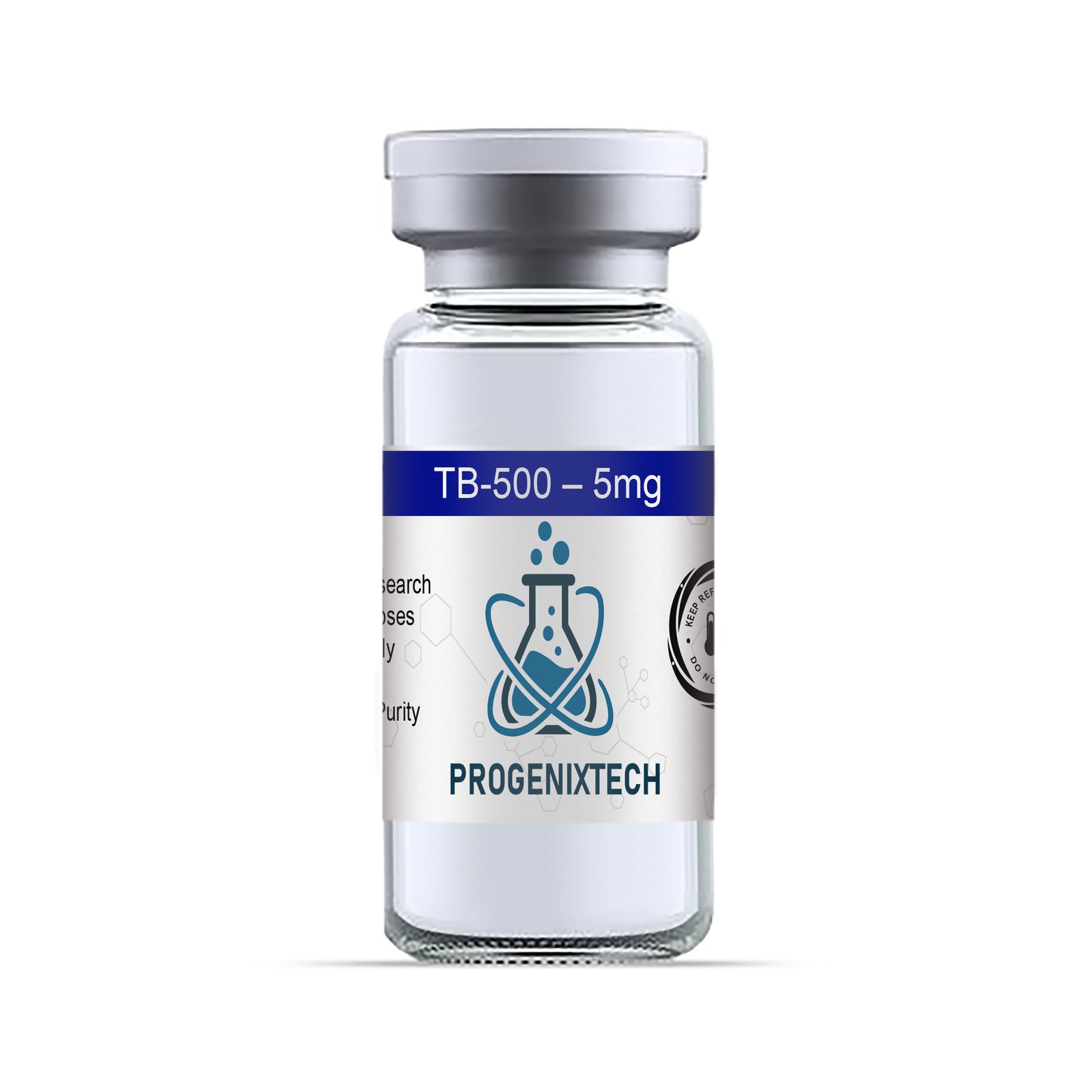
TB500 (Thymosin Beta-4) – 5mg | 10mg
$35.00 – $65.00Price range: $35.00 through $65.00
5 | 10 mg per vial
- This product is prepared for PRESCRIBER USE ONLY and may not be used for other purposes.
FREE & FAST SHIPPING
PUREST QUALITY
EXCELLENT SERVICE
Properties
| Molecular Formula | C212H350N56O78S |
|---|---|
| Molecular Weight | 4963 |
| Monoisotopic Mass | 4960.4863169 |
| Polar Area | 220 |
| Complexity | 12200 |
| XLogP | -43.5 |
| Heavy Atom Count | 347 |
| Hydrogen Bond Donor Count | 72 |
| Hydrogen Bond Acceptor Count | 88 |
| Rotatable Bond Count | 180 |
| Physical Appearance | Fine White Lyophilized Powder |
| Stability | Lyophilized protein is to be stored at -20°C. It is recommended to aliquot the reconstituted (dissolved) protein into several discrete vials in order to avoid repeated freezing and thawing. Reconstituted protein can be stored at 4°C |
| PubChem LCSS |
Identifiers
| CID | 45382195 |
|---|---|
| CAS | 77591-33-4 |
| InChI | InChI=1S/C212H350N56O78S/c1-16-106(7)166(261-190(323)131(64-75-160(292)293)231-172(305)109(10)228-174(307)134(78-91-347-15)245-196(329)140(98-165(302)303)255-201(334)147-53-39-88-266(147)209(342)135(52-29-38-87-221)250-197(330)139(97-164(300)301)254-198(331)143(100-269)229-113(14)276)204(337)246-129(62-73-158(288)289)187(320)233-118(47-24-33-82-216)179(312)252-137(94-114-42-19-18-20-43-114)194(327)253-138(96-163(298)299)195(328)237-121(50-27-36-85-219)181(314)258-144(101-270)199(332)239-119(48-25-34-83-217)178(311)251-136(92-104(3)4)193(326)236-116(45-22-31-80-214)175(308)235-122(51-28-37-86-220)189(322)263-168(110(11)273)207(340)249-133(66-77-162(296)297)192(325)264-169(111(12)274)206(339)248-126(58-69-152(224)279)184(317)243-128(61-72-157(286)287)186(319)234-120(49-26-35-84-218)180(313)256-142(95-153(225)280)211(344)268-90-40-54-148(268)202(335)257-141(93-105(5)6)210(343)267-89-41-55-149(267)203(336)259-145(102-271)200(333)238-117(46-23-32-81-215)177(310)244-132(65-76-161(294)295)191(324)265-170(112(13)275)208(341)262-167(107(8)17-2)205(338)247-130(63-74-159(290)291)188(321)241-125(57-68-151(223)278)183(316)242-127(60-71-156(284)285)185(318)232-115(44-21-30-79-213)176(309)240-124(56-67-150(222)277)173(306)227-108(9)171(304)226-99-154(281)230-123(59-70-155(282)283)182(315)260-146(103-272)212(345)346/h18-20, 42-43, 104-112, 115-149, 166-170, 269-275H, 16-17, 21-41, 44-103, 213-221H2, 1-15H3, (H2, 222, 277)(H2, 223, 278)(H2, 224, 279)(H2, 225, 280)(H, 226, 304)(H, 227, 306)(H, 228, 307)(H, 229, 276)(H, 230, 281)(H, 231, 305)(H, 232, 318)(H, 233, 320)(H, 234, 319)(H, 235, 308)(H, 236, 326)(H, 237, 328)(H, 238, 333)(H, 239, 332)(H, 240, 309)(H, 241, 321)(H, 242, 316)(H, 243, 317)(H, 244, 310)(H, 245, 329)(H, 246, 337)(H, 247, 338)(H, 248, 339)(H, 249, 340)(H, 250, 330)(H, 251, 311)(H, 252, 312)(H, 253, 327)(H, 254, 331)(H, 255, 334)(H, 256, 313)(H, 257, 335)(H, 258, 314)(H, 259, 336)(H, 260, 315)(H, 261, 323)(H, 262, 341)(H, 263, 322)(H, 264, 325)(H, 265, 324)(H, 282, 283)(H, 284, 285)(H, 286, 287)(H, 288, 289)(H, 290, 291)(H, 292, 293)(H, 294, 295)(H, 296, 297)(H, 298, 299)(H, 300, 301)(H, 302, 303)(H, 345, 346) |
| InChIKey | UGPMCIBIHRSCBV-UHFFFAOYSA-N |
| Isomeric SMILES | CC[C@H](C)[C@@H](C(=O)N[C@@H](CCC(=O)O)C(=O)N[C@@H](CCCCN)C(=O)N[C@@H](CC1=CC=CC=C1)C(=O)N[C@@H](CC(=O)O)C(=O)N[C@@H](CCCCN)C(=O)N[C@@H](CO)C(=O)N[C@@H](CCCCN)C(=O)N[C@@H](CC(C)C)C(=O)N[C@@H](CCCCN)C(=O)N[C@@H](CCCCN)C(=O)N[C@@H]([C@@H](C)O)C(=O)N[C@@H](CCC(=O)O)C(=O)N[C@@H]([C@@H](C)O)C(=O)N[C@@H](CCC(=O)N)C(=O)N[C@@H](CCC(=O)O)C(=O)N[C@@H](CCCCN)C(=O)N[C@@H](CC(=O)N)C(=O)N2CCC[C@H]2C(=O)N[C@@H](CC(C)C)C(=O)N3CCC[C@H]3C(=O)N[C@@H](CO)C(=O)N[C@@H](CCCCN)C(=O)N[C@@H](CCC(=O)O)C(=O)N[C@@H]([C@@H](C)O)C(=O)N[C@@H]([C@@H](C)CC)C(=O)N[C@@H](CCC(=O)O)C(=O)N[C@@H](CCC(=O)N)C(=O)N[C@@H](CCC(=O)O)C(=O)N[C@@H](CCCCN)C(=O)N[C@@H](CCC(=O)N)C(=O)N[C@@H](C)C(=O)NCC(=O)N[C@@H](CCC(=O)O)C(=O)N[C@@H](CO)C(=O)O)NC(=O)[C@H](CCC(=O)O)NC(=O)[C@H](C)NC(=O)[C@H](CCSC)NC(=O)[C@H](CC(=O)O)NC(=O)[C@@H]4CCCN4C(=O)[C@H](CCCCN)NC(=O)[C@H](CC(=O)O)NC(=O)[C@H](CO)NC(=O)C |
| Canonical SMILES | CCC(C)C(C(=O)NC(CCC(=O)O)C(=O)NC(CCCCN)C(=O)NC(CC1=CC=CC=C1)C(=O)NC(CC(=O)O)C(=O)NC(CCCCN)C(=O)NC(CO)C(=O)NC(CCCCN)C(=O)NC(CC(C)C)C(=O)NC(CCCCN)C(=O)NC(CCCCN)C(=O)NC(C(C)O)C(=O)NC(CCC(=O)O)C(=O)NC(C(C)O)C(=O)NC(CCC(=O)N)C(=O)NC(CCC(=O)O)C(=O)NC(CCCCN)C(=O)NC(CC(=O)N)C(=O)N2CCCC2C(=O)NC(CC(C)C)C(=O)N3CCCC3C(=O)NC(CO)C(=O)NC(CCCCN)C(=O)NC(CCC(=O)O)C(=O)NC(C(C)O)C(=O)NC(C(C)CC)C(=O)NC(CCC(=O)O)C(=O)NC(CCC(=O)N)C(=O)NC(CCC(=O)O)C(=O)NC(CCCCN)C(=O)NC(CCC(=O)N)C(=O)NC(C)C(=O)NCC(=O)NC(CCC(=O)O)C(=O)NC(CO)C(=O)O)NC(=O)C(CCC(=O)O)NC(=O)C(C)NC(=O)C(CCSC)NC(=O)C(CC(=O)O)NC(=O)C4CCCN4C(=O)C(CCCCN)NC(=O)C(CC(=O)O)NC(=O)C(CO)NC(=O)C |
| IUPAC Name | 4-[[2-[2-[[2-[[2-[[2-[[2-[[2-[[2-[[2-[[2-[[2-[[2-[[1-[2-[[1-[2-[[2-[[2-[[2-[[2-[[2-[[2-[[2-[[2-[[2-[[2-[[2-[[2-[[2-[[2-[[2-[[2-[[2-[[2-[2-[[2-[[2-[[1-[2-[[2-[(2-acetamido-3-hydroxypropanoyl)amino]-3-carboxypropanoyl]amino]-6-aminohexanoyl]pyrrolidine-2-carbonyl]amino]-3-carboxypropanoyl]amino]-4-methylsulfanylbutanoyl]amino]propanoylamino]-4-carboxybutanoyl]amino]-3-methylpentanoyl]amino]-4-carboxybutanoyl]amino]-6-aminohexanoyl]amino]-3-phenylpropanoyl]amino]-3-carboxypropanoyl]amino]-6-aminohexanoyl]amino]-3-hydroxypropanoyl]amino]-6-aminohexanoyl]amino]-4-methylpentanoyl]amino]-6-aminohexanoyl]amino]-6-aminohexanoyl]amino]-3-hydroxybutanoyl]amino]-4-carboxybutanoyl]amino]-3-hydroxybutanoyl]amino]-5-amino-5-oxopentanoyl]amino]-4-carboxybutanoyl]amino]-6-aminohexanoyl]amino]-4-amino-4-oxobutanoyl]pyrrolidine-2-carbonyl]amino]-4-methylpentanoyl]pyrrolidine-2-carbonyl]amino]-3-hydroxypropanoyl]amino]-6-aminohexanoyl]amino]-4-carboxybutanoyl]amino]-3-hydroxybutanoyl]amino]-3-methylpentanoyl]amino]-4-carboxybutanoyl]amino]-5-amino-5-oxopentanoyl]amino]-4-carboxybutanoyl]amino]-6-aminohexanoyl]amino]-5-amino-5-oxopentanoyl]amino]propanoylamino]acetyl]amino]-5-[(1-carboxy-2-hydroxyethyl)amino]-5-oxopentanoic acid |
Description
TB500
Product is sold for prescriber purposes only. Please handle with care and follow all safety guidelines for the specific chemicals involved.
What is TB500 (Thymosin Beta-4)
Effects of TB-500 Demonstrated in Recent Studies
Recent studies on TB-500 (Thymosin Beta 4) have shown potential benefits, including promoting endothelial cell differentiation, angiogenesis in dermal tissues, and keratinocyte migration. The peptide may also enhance collagen deposition, reduce joint inflammation, increase muscle growth, and improve muscle tone and endurance. Additionally, TB500 (Thymosin Beta-4) has been found to relax muscle spasms, promote tissue repair, increase cellular exchange, and help maintain flexibility by stretching connective tissue. It also aids in preventing the formation of adhesions and fibrous bands in muscles, tendons, and ligaments.
Purely for Scientific Research
While significant research has been conducted on TB500 (Thymosin Beta-4), it is crucial to note that this peptide is intended solely for scientific study. Any findings or observations related to TB-500’s functionality, mechanics, or benefits should be derived exclusively from controlled research environments.
Muscle Repair and Maintenance – TB500
TB500 (Thymosin Beta-4) has been researched extensively in the areas of muscle and connective tissue repair5. TB500 (Thymosin Beta-4) has been shown to stimulate the overproduction of regenerative fibers following injury, thereby speeding the process of recovery with minimal inflammation and residual scarification.
TB500’s property of enhancing muscle growth in both healthy and damaged tissues has led to its application as an experimental therapeutic in animal test subjects with muscular dystrophy6. Regular administration of TB500 (Thymosin Beta-4) allowed animal test subjects with muscular dystrophy to achieve much improved maintenance of muscle growth and development, even in the absence of important, naturally occurring proteins that usually guide this action.
TB500 (Thymosin Beta-4) has also been researched to be an aid in the healing of heart tissue following heart attack7 and as a very powerful agent for quickly healing skin abrasions. TB500’s angiogenic (blood vessel-forming) properties8 are responsible for its excellent application in these areas.
Synonyms:
Thymosin Beta 4; TB500; TB-500
Peer-Reviewed Sources:
- Safer, D., Elzinga, M., & Nachmias, V. T. (1991). Thymosin beta 4 and Fx, an actin-sequestering peptide, are indistinguishable. Journal of Biological Chemistry, 266(7), 4029-4032.
- Grant, D. S., Kinsella, J. L., Kibbey, M. C., LaFlamme, S., Burbelo, P. D., Goldstein, A. L., & Kleinman, H. K. (1995). Matrigel induces thymosin beta 4 gene in differentiating endothelial cells. Journal of cell science, 108(12), 3685-3694.
- Malinda, K. M., Sidhu, G. S., Mani, H., Banaudha, K., Maheshwari, R. K., Goldstein, A. L., & Kleinman, H. K. (1999). Thymosin β4 accelerates wound healing. Journal of investigative dermatology, 113(3), 364-368.
- Sosne, G., Szliter, E. A., Barrett, R., Kernacki, K. A., Kleinman, H., & Hazlett, L. D. (2002). Thymosin beta 4 promotes corneal wound healing and decreases inflammation in vivo following alkali injury. Experimental eye research,74(2), 293-299.
- Blain, E. J., Mason, D. J., & Duance, V. C. (2002). The effect of thymosin beta4 on articular cartilage chondrocyte matrix metalloproteinase expression. Biochemical Society Transactions, 30(Pt 6), 879-882.
- Spurney, C. F., Cha, H. J., Sali, A., Pandey, G. S., Pistilli, E., Guerron, A. D., & Nagaraju, K. (2010). Evaluation of Skeletal and Cardiac Muscle Function after Chronic Administration of Thymosin β-4 in the Dystrophin Deficient Mouse. PloS one, 5(1), e8976.
- Crockford, D. (2007). Development of thymosin β4 for treatment of patients with ischemic heart disease. Annals of the New York Academy of Sciences, 1112(1), 385-395.
- Smart, N., Rossdeutsch, A., & Riley, P. R. (2007). Thymosin β4 and angiogenesis: modes of action and therapeutic potential. Angiogenesis, 10(4), 229-241.
ALL LITERATURE, INFORMATION, AND DATA, PROVIDED ON THIS WEBSITE ARE FOR INFORMATIONAL AND EDUCATIONAL PURPOSES ONLY.

Accurate research is our number one priority.
Same Day Shipping
Enjoy the convenience of receiving your order swiftly. We offer same-day shipping on all orders of in-stock items placed before 12:00 pm EST.
Dedicated Service
Our dedicated team is always at your service, Ready to assist you with any customer service requests you may have. We prioritize your satisfaction and aim to provide a seamless experience.
Free Shipping
To enhance your shopping experience, We offer free shipping on all orders totaling $200 or more. Rest assured, we've got you covered!
Purist Quality
We take pride in ensuring the utmost purity of our products. Every item we offer undergoes rigorous lab testing and is certified for the highest possible purity.
