

Description
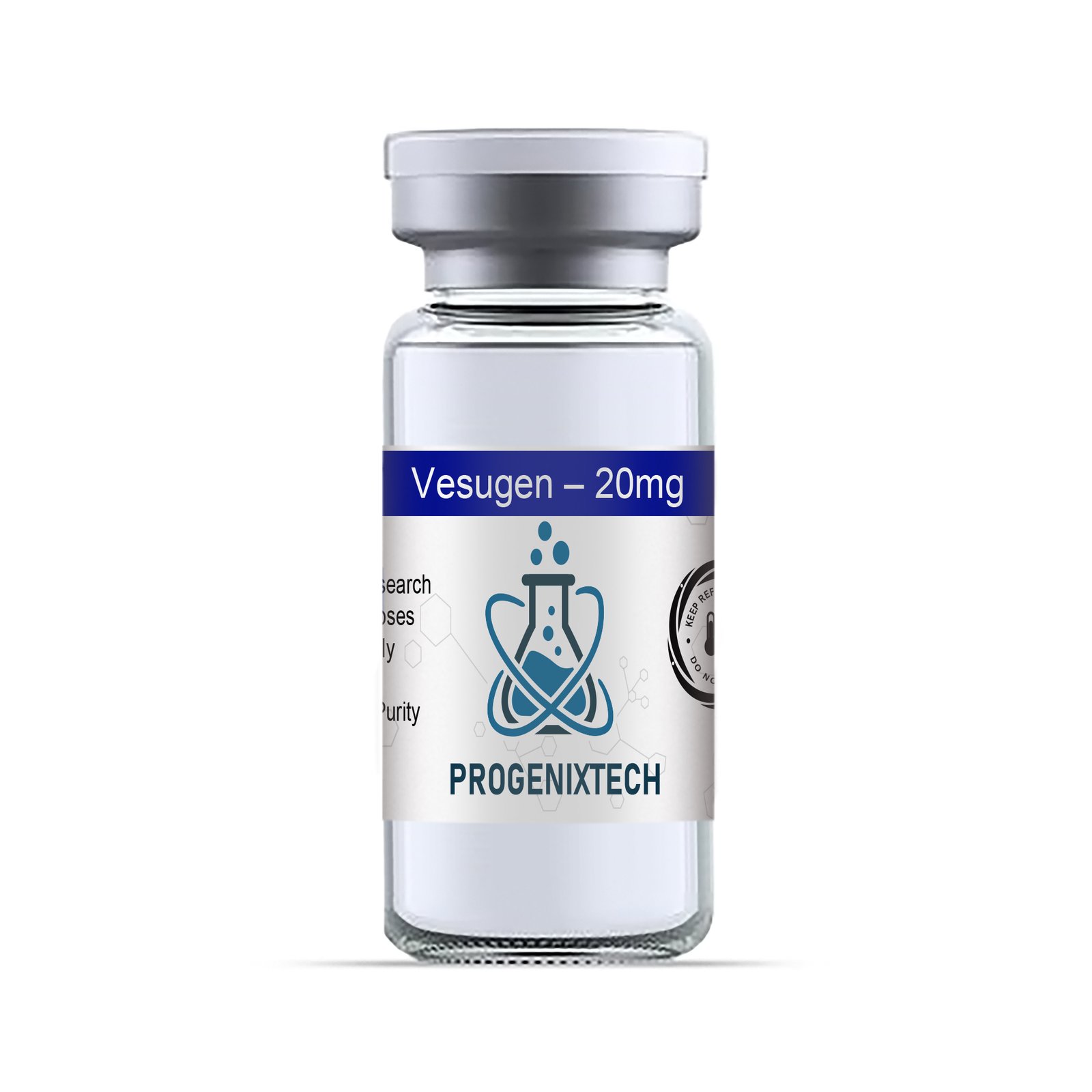
Vesugen: A Summary
Product is sold for prescriber purposes only. Please handle with care and follow all safety guidelines for the specific chemicals involved.
Vesugen is a short peptide bioregulator derived from the vascular endothelial cell peptide complex. It is known for its role in modulating gene expression related to vascular health, angiogenesis, and endothelial regeneration. Studies on lab rats have provided preliminary insights into its potential therapeutic benefits in vascular aging, stress resistance, and tissue regeneration.
In rodent models, Vesugen has demonstrated significant vascular-protective effects, particularly in aged rats. It has been shown to normalize endothelial function, improve blood flow, and reduce markers of oxidative stress. In one study, aged Wistar rats treated with Vesugen exhibited improved endothelial cell morphology and increased nitric oxide production, suggesting enhanced vasodilation capacity and improved microcirculation (Khavinson et al., 2012).
Vesugen also appears to influence gene expression involved in DNA repair and stress response. In a separate experiment, administration of Vesugen led to the upregulation of telomerase activity and anti-apoptotic genes, indicating potential geroprotective and anti-aging effects (Terekhov et al., 2011). These findings suggest its utility not only for vascular restoration but also as a systemic anti-aging intervention.
Another study evaluated the protective role of Vesugen under ischemic conditions. Treated rats displayed reduced infarct size and improved survival rates following induced cerebral ischemia. This indicates neurovascular protection and possible application in ischemic stroke models (Khavinson et al., 2014).
While Vesugen has shown promising preclinical effects, further research—including controlled human trials—is necessary to confirm efficacy and safety. Nonetheless, its action on endothelial gene regulation and tissue regeneration in rodents provides a compelling case for further exploration.
References (PubMed):
- Khavinson V, et al. Peptides in regulation of aging. Clin Interv Aging. 2012;7:153–160. [PMID: 22879846]
- Terekhov SM, et al. Effect of peptide bioregulators on gene expression in senescent cells. Bull Exp Biol Med. 2011;151(5):622–625. [PMID: 22238788]
- Khavinson V, et al. Peptide regulation of aging: Results and prospects. Biogerontology. 2014;15(2):129–138. [PMID: 24318560]